

7 Common Causes of Flat Tires on Austin Highways (and How to Stay Safe)

Driving in Austin is a unique experience—from the music to the food, and unfortunately, the traffic. Whether you are navigating the “upper deck” of I-35 or cruising the MoPac Express lanes, the last thing you want is a sudden tire failure. Austin’s rapid growth and intense weather create a perfect storm for tire damage.
To help you stay on the road, we’ve identified the seven most common causes of flat tires on our local highways and what you can do to stay safe.
Why Flat Tires Are More Common in Austin Than Most Cities
Austin creates a unique “perfect storm” for tire damage:
- Triple-digit heat for months at a time
- Rapid infrastructure expansion
- High-speed highway corridors
- Construction zones that are quite busy
- Heavy commuter traffic
- Sudden flooding conditions
Unlike cities with milder climates, Austin combines extreme pavement heat with long commuting distances. That accelerates tire wear and increases blowout risk.
Roadside technicians in Central Texas consistently report that summer and construction seasons see spikes in flat tire service calls.
This is why having access to a reliable roadside tire repair in Austin is critical for local drivers.
The Top 7 Causes of Flat Tires in Austin
- Constant Construction Debris
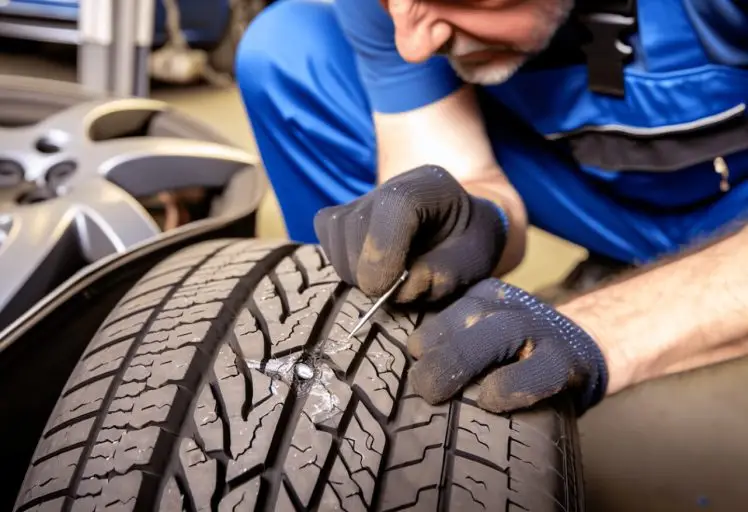
With the massive I-35 Capital Express project and major upgrades at the I-35 and US-183 interchange, construction is everywhere. Nails, screws, and metal shards are common in these zones. A single piece of stray hardware can cause an immediate puncture, especially during peak rush hour.
Austin’s legendary summer heat isn’t just hard on you; it’s brutal on your tires. When the temperature hits triple digits, the air inside your tires expands, increasing internal pressure. This, combined with friction against 140-degree pavement, significantly raises the risk of a high-speed blowout.
- Potholes on High-Traffic Corridors
Heavy transit traffic on corridors like US-183 and State Highway 71 leads to deep potholes and road degradation. Hitting a sharp edge at 60 mph can cause an “impact break” or a “pinch flat,” where the tire is squeezed against the rim, ruining both.
- The “MoPac” Shoulder Hazard
On the MoPac Expressway (Loop 1), construction zones and narrow shoulders mean there is very little room for debris to escape the travel lanes. Tires often pick up “road gunk” near the entrance and exit ramps where debris tends to collect.
- Improperly Secured Loads
Austin is a hub for moving and hauling. Unfortunately, unsecured cargo frequently falls off trucks and trailers. From furniture legs to landscaping tools, hitting an object on the highway often results in a tire failure that cannot be patched.
- Airport Travel Stress
Heading to or from Austin-Bergstrom International Airport (AUS)? The heavy stop-and-go traffic on the airport access roads can exacerbate existing tire wear. If your tires are already thin, the constant braking and accelerating in the Texas heat can be the final straw.
- Flash Floods and Worn Treads
When Austin gets rain, it gets a lot of it. Worn tires lose the ability to channel water away, leading to hydroplaning. If you lose control and clip a curb or a concrete barrier, your tire—and likely your wheel—will be destroyed.
What to Do if You Get a Flat on an Austin Highway
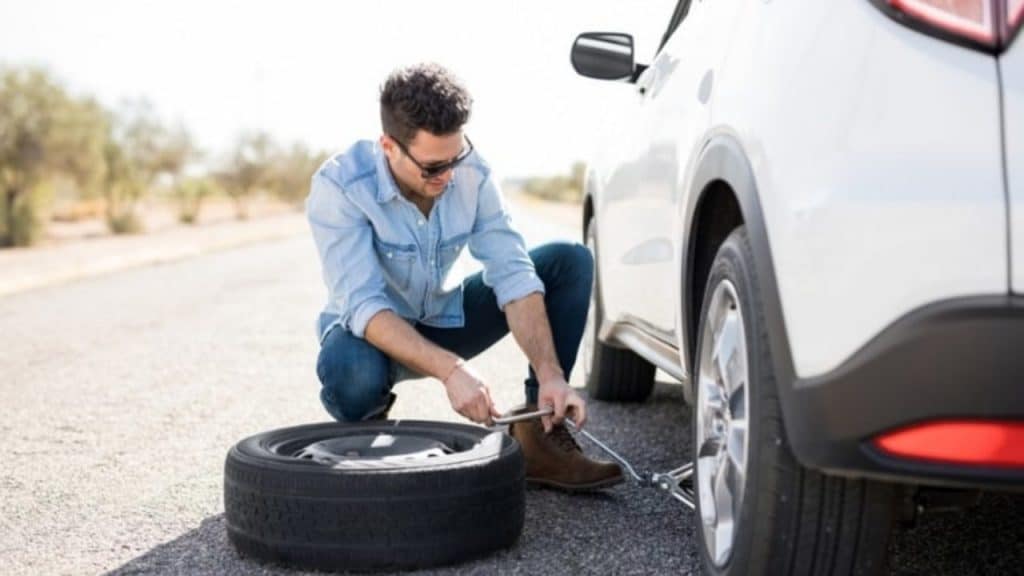
If you feel that tell-tale vibration while driving, your safety is the priority. Follow these steps:
- Move to Safety: Try to get to the right shoulder. If you are near a landmark like The Domain or Zilker Park, try to exit the highway entirely to find a flat, well-lit parking lot.
- Stay Visible: Turn on your hazard lights immediately. This is vital on high-speed roads like I-35 or MoPac.
- Stay Inside: If you are stranded on a narrow highway shoulder, stay inside the vehicle with your seatbelt buckled. Walking around the car on the side of live traffic is extremely dangerous.
How to Reduce Your Risk of a Flat Tire in Austin
While you can’t eliminate risk entirely, you can lower it significantly:
✔ Check the pressure of your tires once a month.
✔ Rotate your tires every 5,000 to 7,000 miles.
✔ Replace tires that are 5 to 6 years old.
✔ Stay away from construction lanes that are full of debris.
✔ Replace worn tread before the rainy season.
✔ Keep your spare tire inflated.
Preventative maintenance is cheaper than roadside emergencies.
Mobile Tire Service vs. Towing: Which is Better?
Many drivers think they need a tow truck for a flat tire, but that often means waiting hours for a tow and then even longer at a shop. Choosing a professional mobile tire change in Austin is almost always faster and more cost-effective. Instead of paying for a tow and a waiting room, our technicians come to your exact location—whether you’re in the 78704 area or stuck at the airport—to perform an on-site repair or spare tire installation.
Don’t Let One Problem Lead to Another
A flat tire can sometimes be a symptom of a larger issue. If you were running your electronics while waiting for help, you might also need a dead battery jump start in Austin. Additionally, if you were startled by the blowout and accidentally locked your keys inside, our car unlock services are available 24/7.
Why Fast Response Matters in Austin
Austin traffic doesn’t stop for roadside emergencies.
On highways like I-35 and MoPac:
- Vehicles travel 60–75 mph
- Shoulder space is limited
- Night visibility is poor
- Construction zones reduce safety margins
The longer you remain stranded, the greater the risk.
Quick mobile tire service reduces:
- Exposure time
- Stress
- Secondary vehicle damage
- Traffic hazard risk
If you are currently searching for “roadside assistance near me in Austin“ or need a mobile tire repair in 78704, don’t wait. Our dispatchers are standing by to get a technician to you immediately.
Call (866) 584-8488 or Book Your Service Online Now for fast, reliable, 24/7 emergency help.
Frequently Asked Questions: Flat Tires in Austin
How long can you drive on a flat tire?
You should not drive on a flat tire. Even short distances can destroy the rim and suspension components.
Is it safe to change a tire on I-35 or MoPac?
Not always. Narrow shoulders and high-speed traffic create serious danger. If space is limited, stay inside the vehicle and call for assistance.
Can extreme heat cause tire blowouts?
Yes. High pavement temperatures increase internal tire pressure and weaken rubber compounds, raising blowout risk.
How fast can mobile tire service arrive in Austin?
Arrival time varies by location and traffic, but mobile service is typically faster than towing.
Can a tire be repaired instead of replaced?
If the hole is less than 1/4 inch deep and in the tread area, it might be fixable. Sidewall damage usually requires replacement.