
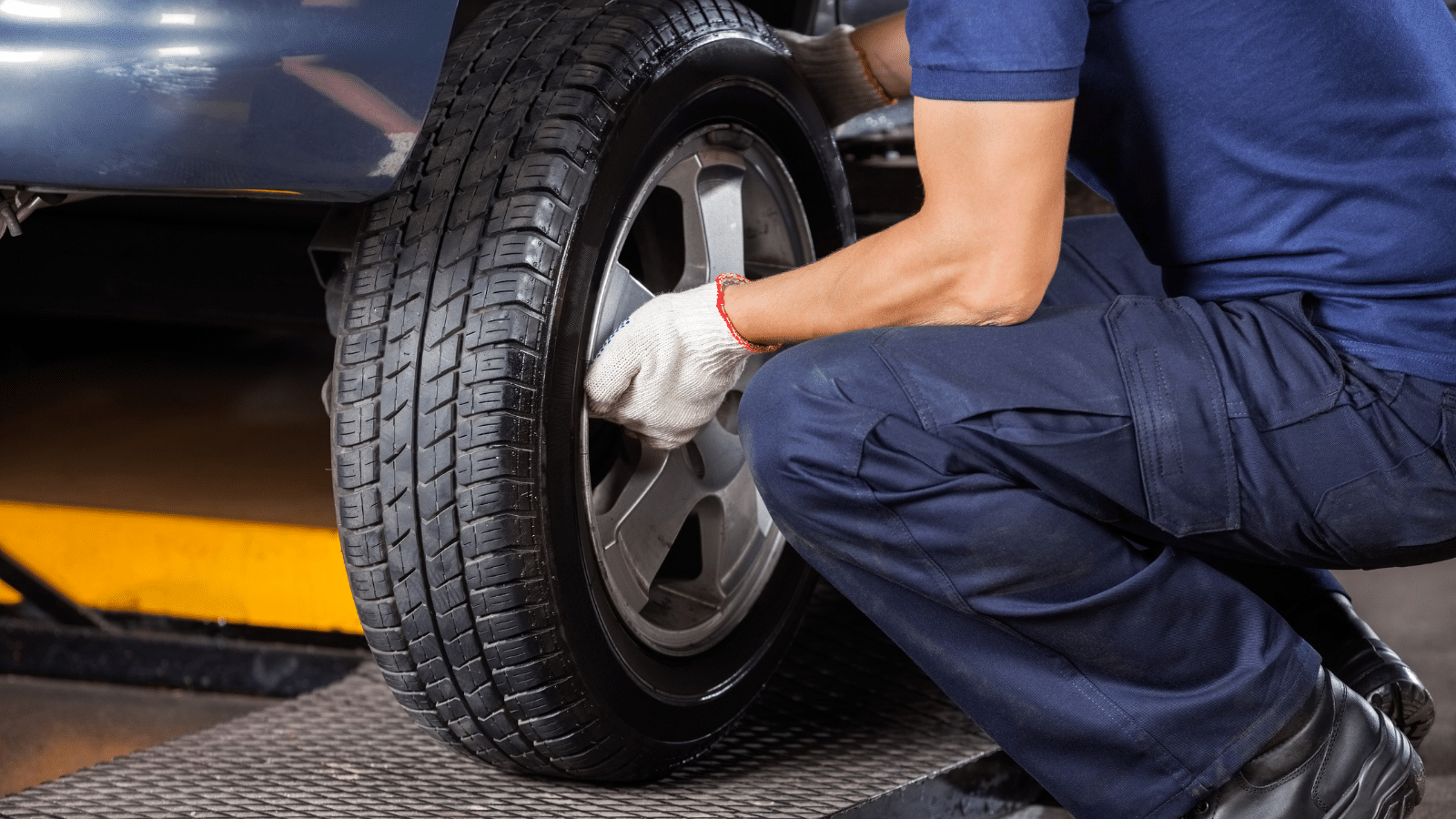
How To Change A Tire
Step-by-step guide to safely changing a flat tire roadside: tools, spare setup, frozen lug nuts, and when to call for mobile help instead.
If you’ve ever pulled onto the shoulder on I-35 outside San Marcos or sat on the side of Loop 101 in Phoenix with a flat, you know that learning how to change a tire is about more than a checklist. You want clear, calm steps, what to do in an emergency flat tire change, and when it’s smarter to call a pro instead of searching “tire change near me” and hoping for the best. This guide walks you through real-world situations our 24Hr Car Unlocking techs see every day across Texas, Arizona, and Nevada.
We’ll show you how to change a flat tire step by step, the tire change tools needed, and how our mobile roadside service fits into your decision. You’ll see what we actually do on-site, how long it usually takes, what’s included, what isn’t, and how local roads, heat, and traffic in your city affect your options.
When you should NOT change a tire yourself
Before we get into tools and steps, it’s important to know when to stop and call for help.
You should avoid changing a tire yourself if:
- You’re on a high-speed highway with no wide shoulder
- Your vehicle is on a curve, hill, or blind spot
- The flat is on the traffic side and there’s no safe space to stand
- It’s dark and you don’t have flares, triangles, or hazard lights
- You don’t have a good spare, jack, or lug wrench
- You’re not physically able to lift and handle the tire
On I-10 outside Tucson, I-15 near Las Vegas, or I-45 between Houston and Dallas, traffic can be fast and heavy at all hours. In those spots, an emergency flat tire change in the lane or on a narrow shoulder is risky. That’s when a mobile service like 24Hr Car Unlocking is the safer choice.
If you’re unsure, pull as far off the road as you safely can, turn on your hazards, and call (866) 584-8488. We can talk through your situation and help you decide whether to wait for a technician or attempt a change yourself.
Tire change tools needed for a safe roadside change
To change a tire safely, you need more than just a jack. Here’s what our techs look for in a basic roadside kit:
- Spare tire: Full-size or compact “donut” spare, properly inflated
- Jack: Scissor jack or bottle jack rated for your vehicle’s weight
- Lug wrench: Often a four-way wrench or the factory wrench from your trunk
- Wheel chocks: Blocks or wedges to keep the car from rolling
- Owner’s manual: Shows jack points and torque specs
- Gloves: For grip and to keep your hands cleaner
- Flashlight or headlamp: Critical at night or in low light
- Tire pressure gauge: To check the spare once it’s on
- Reflective triangles or flares: To warn oncoming traffic
Our trucks carry professional-grade versions of these tools, plus extras like impact wrenches, low-profile jacks for lowered cars, and portable air compressors. But if you’re building your own kit, start with the list above.
How to change a flat tire step by step
This is the core process our technicians follow, adjusted for safety and conditions. If anything here feels unsafe where you are, stop and call for help.
1. Get to the safest spot you can
- Slow down gradually. Do not slam on the brakes.
- Turn on your hazard lights.
- Look for a wide shoulder, parking lot, or side street.
- Avoid soft dirt or steep slopes where the jack could sink or slip.
In places like the I-35 corridor between San Antonio and Austin, or along US-60 in the East Valley near Mesa, even moving an extra few hundred feet to a wider shoulder can make a big difference.
2. Secure the vehicle
- Put the vehicle in Park (or in gear if it’s a manual).
- Set the parking brake firmly.
- Place wheel chocks or blocks on the opposite side of the flat (front of the tire if the flat is in back, behind the tire if the flat is in front).
This reduces the chance of the vehicle rolling when it’s on the jack.
3. Gather your tools and spare
- Retrieve the jack, lug wrench, and spare tire from the trunk, cargo area, or underbody mount.
- Check the spare for visible damage.
- If you have a flashlight, set it where it lights your work area without blinding you.
4. Loosen the lug nuts slightly
- Remove the hubcap or wheel cover if there is one.
- Place the lug wrench on a lug nut and turn it counterclockwise.
- Loosen each lug nut about one turn, but do not remove them yet.
It’s easier and safer to break the lug nuts loose while the tire is still on the ground.
5. Position the jack correctly
- Check your owner’s manual for the correct jack point near the flat tire.
- Place the jack under that point, making sure it sits on solid, level ground.
- Double-check that it’s straight and stable.
On some SUVs and trucks common in Texas and Nevada, the jack points are reinforced frame areas. Using the wrong spot can bend body panels or cause the jack to slip.
6. Raise the vehicle
- Slowly pump or turn the jack handle to lift the vehicle.
- Raise it until the flat tire is just off the ground and can spin freely.
- Do not crawl under the vehicle while it’s only supported by a jack.
If the jack starts to lean or sink into the ground, lower the vehicle and reposition.
7. Remove the lug nuts and flat tire
- Finish removing the loosened lug nuts. Keep them in a safe place.
- Grip the tire with both hands at the 3 and 9 o’clock positions.
- Pull the tire straight toward you to remove it from the hub.
If the tire is stuck from rust or corrosion, a gentle rock side to side can help free it. Do not kick the tire hard while the vehicle is on the jack.
8. Mount the spare tire
- Line up the holes in the spare with the wheel studs.
- Lift the spare and slide it onto the studs until it seats against the hub.
- Thread the lug nuts on by hand, tightening them snugly in a star pattern.
Hand-threading helps prevent cross-threading, which can damage the studs.
9. Lower the vehicle and tighten the lug nuts
- Lower the jack slowly until the tire just touches the ground and doesn’t spin.
- Use the lug wrench to tighten the nuts in a star pattern.
- Put your weight into it, but don’t jump on the wrench.
- Once tight, lower the vehicle completely and remove the jack.
If you have a torque wrench and know the correct spec from your manual, use it now. Otherwise, make them as evenly tight as you reasonably can.
10. Check the spare and clean up
- Use a tire pressure gauge to check the spare.
- If it’s low and you have a portable inflator, bring it up to the pressure listed on the sidewall or door jamb sticker.
- Put the flat tire, jack, and tools back in the vehicle.
- Remove wheel chocks and any triangles or flares when it’s safe.
Drive cautiously and avoid high speeds, especially on compact spares. Many are not designed for long distances or highway speeds.
When a DIY tire change becomes an emergency
Sometimes a flat is more than a simple puncture. Our techs often see:
- Sidewall blowouts from potholes on city streets in San Antonio or Phoenix
- Shredded tires after long drives on I-10 or US-93 in desert heat
- Bent wheels from hitting curbs in tight Las Vegas parking garages
- Multiple flats from debris on construction-heavy routes
In these cases, you may not have a usable spare, or the damage may be too severe for a quick swap. That’s when an emergency flat tire change service like ours can:
- Install your spare if you’re not comfortable doing it
- Bring air to re-inflate a slow leak so you can reach a tire shop
- Help arrange light-duty towing if the wheel or suspension is damaged
If you’re on a busy road, in extreme heat, or unsure about the damage, call (866) 584-8488. We can usually give you clear next steps in a short phone call.
How 24Hr Car Unlocking handles tire changes on-site
Our technicians handle tire issues every day across Texas, Arizona, and Nevada. While every call is different, here’s what you can typically expect when you choose us instead of trying to find a random “tire change near me” listing.
What’s included in a standard tire change visit
When we come out for a tire issue, we typically:
- Confirm your location and situation
- Highway, surface street, parking lot, or driveway
- Vehicle make and model
- Type of tire problem (flat, blowout, slow leak)
- Assess safety on arrival
- Check shoulder width and traffic speed
- Set up hazard lights and, when needed, triangles
- Decide whether to reposition the vehicle if possible
- Use professional tools
- Low-profile or heavy-duty jacks, depending on the vehicle
- Impact or breaker-bar lug tools for stubborn lug nuts
- Portable air compressor and pressure gauge
- Perform the tire change or inflation
- Install your spare tire if it’s usable
- Inflate a low tire and check for obvious leaks
- Move a good tire from another position if that’s the safest option and you approve
- Basic checks before you drive away
- Confirm lug nuts are tight in a star pattern
- Check spare tire pressure
- Offer guidance on how far and how fast to drive on the spare
What’s NOT included
To keep expectations clear, here are common items that are usually not part of a basic roadside tire change visit:
- Selling or mounting new tires like a full tire shop
- Major wheel or suspension repair
- Alignment services
- Long-distance towing (we can help with light-duty towing or connect you with a tow provider when needed)
- Permanent patching from the inside of the tire (this is best done at a tire shop)
If you’re unsure whether your situation fits a standard tire change, describe it when you call. We’ll tell you what we can do on-site and when you might need a shop or tow instead.
Typical timing on-site
Actual times vary with traffic, weather, and where you’re parked, but a straightforward tire change usually takes less time than most people expect once we arrive.
On-site time is affected by:
- How accessible the vehicle is (tight parking garages vs open lots)
- Whether the spare is easy to reach (underbody mounts can take longer)
- How stuck the lug nuts are
- Weather conditions, especially extreme heat or heavy rain
We won’t quote specific arrival times here, but when you call dispatch at (866) 584-8488, we’ll give you a realistic estimate based on your exact location, time of day, and local traffic.
Local tire change realities in Texas, Arizona, and Nevada
Changing a tire in a quiet San Marcos neighborhood is not the same as dealing with a blowout on the 215 Beltway in Las Vegas or on the Loop 202 in Phoenix. Our techs work these roads every day and plan around local conditions.